How to Stop Feeling Intimidated by Certain Hair Types
You know the one. Maybe it's the client with thick, coarse hair that feels like it takes twice as long to cut and leaves your shears feeling dull. Maybe it's the naturally curly client who you're terrified will leave looking like a triangle. Or the fine-haired client where every mistake shows and there's zero room for error.
Whatever your "intimidation hair type" is, here's the truth: That feeling isn't about the hair. It's about not having the right knowledge, technique, or tools for that specific texture.
And I'm going to help you fix that.
Why We Avoid Certain Hair Types
First, let's normalize this: every stylist has hair types that make them nervous. It's not a character flaw or a sign you're not good enough. It usually means one of three things:
- You weren't properly trained on that texture - Beauty school often focuses on one or two hair types (usually fine to medium, straight to wavy) and expects you to figure out the rest.
- You had a bad experience early in your career - One upset curly-haired client or one chunky, bulky thick-hair disaster can create years of avoidance.
- You're using the wrong technique or tools for that hair type - What works beautifully on fine hair can be completely wrong for coarse hair, and vice versa.
The problem? When you avoid certain hair types, you limit your clientele, your income, and your confidence. You start declining clients or referring them out. You feel like an imposter when someone asks if you're "good with curly hair" and you have to hedge your answer.
It's time to stop shrinking your business because of texture intimidation.
The Four Hair Types That Intimidate Stylists Most (And How to Conquer Them)
1. Thick, Coarse, Abundant Hair
Why it's intimidating: It takes forever to cut, it's physically exhausting, your shears feel like they're working overtime, and if you don't remove enough weight, the client looks boxy and bulky.
The breakthrough: Thick hair isn't your enemy—not removing weight properly is. This hair type actually needs aggressive texturizing and interior weight removal to move, lie flat, and look intentional.
What to do differently:
- Stop relying solely on shears for everything. Thick hair responds beautifully to razors and texturizing techniques that remove bulk without destroying length.
- Work in smaller sections. Yes, it takes longer, but you'll have more control and less hand fatigue.
- Focus on the interior. Most of the weight is hidden inside the haircut. Heavy point cutting, slide cutting, or razor work through the interior transforms thick hair from heavy to soft.
- Check your work when it's dry. Thick hair can look perfect wet and still be too heavy when dry.
Mindset shift: Thick hair gives you more to work with, not less. When you know how to remove weight strategically, you can create incredible movement and shape.
2. Fine, Thin Hair
Why it's intimidating: Every mistake shows. There's no room for over-texturizing. Clients are often self-conscious about their hair looking "flat" or "limp," and you're terrified of making it worse.
The breakthrough: Fine hair doesn't need more hair—it needs more precise cutting. The goal is to create the illusion of fullness through shape, not through teasing or products alone.
What to do differently:
- Be conservative with texturizing. Fine hair can't afford to lose density. When you do texturize, work only on the very ends or use extremely light techniques.
- Focus on blunt lines and solid shapes. Blunt cuts make fine hair look thicker because the ends are all one length and weight line.
- Use graduation strategically. Stacking weight in the right places (like a graduated bob) creates lift and fullness.
- Avoid over-layering. Too many layers = stringy, wispy ends that emphasize how little hair there is.
Pro tip: A sharp razor used correctly can actually be excellent for fine hair—it creates soft, feathery ends that blend seamlessly without removing too much density. But it requires precision and a light hand.
Mindset shift: Fine hair isn't fragile or limiting. It's elegant. When cut well, it moves beautifully and holds shape like no other texture.
3. Curly and Textured Hair
Why it's intimidating: It shrinks when it dries. It springs up unpredictably. You're not sure how much to cut. You're terrified of creating a pyramid or making it too short.
The breakthrough: Curly hair follows the same principles as any other hair—it just shows your mistakes differently. The key is understanding curl patterns and working with the texture, not against it.
What to do differently:
- Cut it dry (or at least finish dry). You need to see where the curls actually fall and how they spring. Cutting curly hair wet is like cutting with a blindfold on.
- Never use thinning shears on curly hair. They create frizz and disrupt the curl pattern. If you need to remove weight, use point cutting, slide cutting, or a razor.
- Cut curl by curl if needed. Especially around the face and for tighter curl patterns, individual curl cutting gives you maximum control.
- Remove interior weight, not length. Curly hair gets bulky and triangular when there's too much weight underneath. Focus on hollowing out the interior while preserving the perimeter.
- Account for shrinkage. Curls can shrink anywhere from 20-70% depending on the curl pattern. When in doubt, cut less.
Mindset shift: Curly hair isn't unpredictable—it's just following rules you haven't learned yet. Once you understand those rules, curly clients become some of the most loyal, grateful clients you'll ever have (because so few stylists cut curls well).
4. Combination Textures (Straight on Top, Wavy Underneath or Vice Versa)
Why it's intimidating: Nothing behaves the way you expect. The top layer air-dries one way, the bottom layer does something completely different. You're never sure what the finished result will look like.
The breakthrough: Combination textures require customized cutting on different sections. You can't use a one-size-fits-all approach.
What to do differently:
- Identify the different texture zones during your consultation. Where does it wave? Where does it lie flat? Where does it get frizzy?
- Cut each zone according to its texture. The straight sections might need more texturizing; the wavy sections might need weight to keep them from puffing up.
- Use a razor or texturizing technique that softens transitions between the different textures so they blend rather than fight each other.
- Always do a dry check. Combination hair will surprise you if you only look at it wet.
Mindset shift: Combination textures aren't a problem to fix—they're an opportunity to show off your technical skill. When you nail it, these clients never leave you.
The Tool You're Probably Not Using (That Could Change Everything)
Here's something most stylists don't realize: the right tool can eliminate 80% of your texture intimidation.
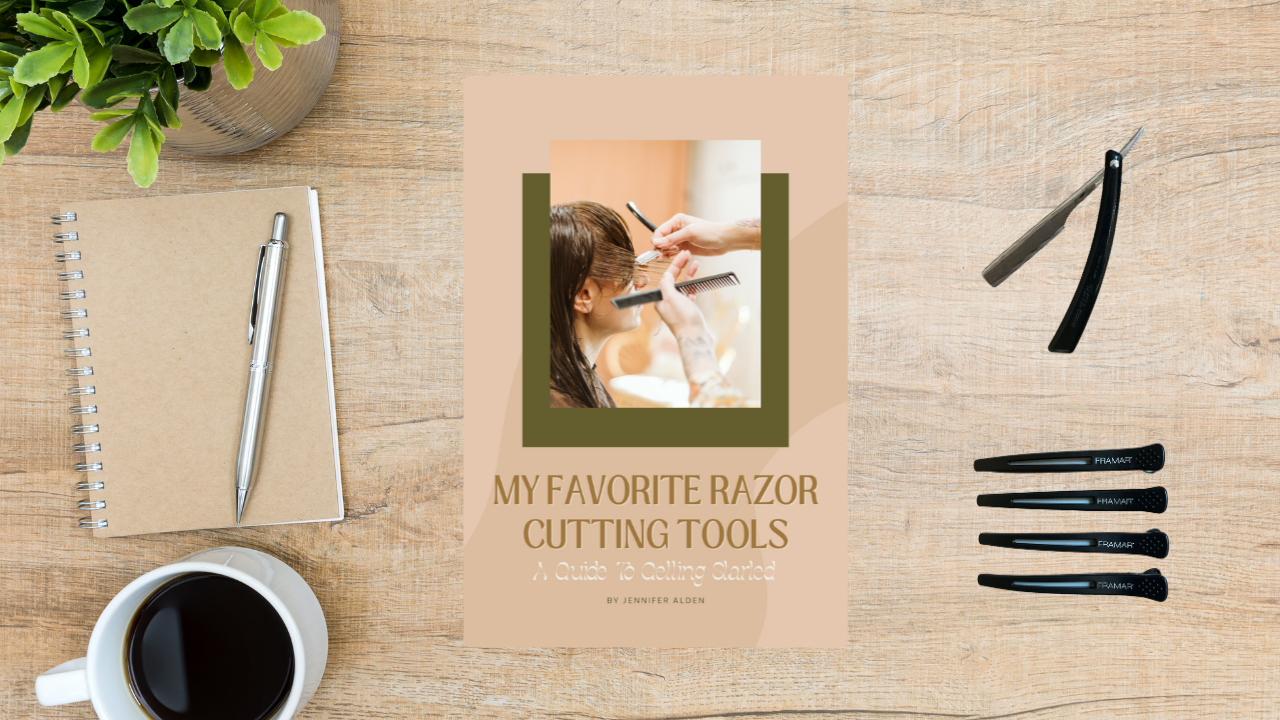
For years, I struggled with thick, coarse hair. I was exhausted after every client, my cuts looked chunky, and I dreaded those appointments. Then I learned to properly use a razor for weight removal and texturizing—and everything changed.
Razors excel at:
- Removing bulk from thick hair without creating harsh lines
- Creating soft, seamless texture in any hair type
- Working with the natural fall of the hair instead of fighting it
- Reducing physical strain on your hands and wrists
The problem? Most stylists were either never taught razor techniques or were taught incorrectly (hello, razor burn and frizz). When used properly, a razor becomes one of the most versatile, efficient tools in your kit.
The same principle applies to any technique: When you feel intimidated by a hair type, it's often because you don't have the right technique or tool for that specific situation.
Your Action Plan: Stop Avoiding, Start Mastering
Step 1: Identify your intimidation hair type. Be honest. Which texture makes you want to refer the client out?
Step 2: Book a model with that hair type. You need practice without the pressure of a paying client watching the clock.
Step 3: Experiment with different techniques and tools. Try a razor. Try different sectioning. Try cutting it dry. See what happens.
Step 4: Invest in targeted education. You can't master what you've never been taught. Find courses, classes, or mentors who specialize in the textures that challenge you.
Step 5: Reframe the narrative. Instead of "I'm bad at thick hair," try "I'm learning to work with thick hair." Growth mindset changes everything.
The Bottom Line
Every hair type has its challenges—and its superpowers. Thick hair holds shape and volume like a dream. Fine hair moves beautifully and is incredibly versatile. Curly hair has personality and life. Combination textures keep you sharp and creative.
You're not supposed to know everything. But you are supposed to keep learning, growing, and expanding your skill set. The stylists who build the biggest, most diverse client bases aren't the ones who were naturally gifted with all hair types—they're the ones who refused to let intimidation stop them from mastering new techniques.
Your dream client might have the exact hair type you're currently avoiding. Don't let fear keep you from that level of success.
Ready to master razor cutting and transform how you approach every hair type? My Razor Cutting Essentials Mini Course teaches you the foundational techniques to remove weight, create texture, and work confidently with any hair that sits in your chair—all for just $97. Stop feeling intimidated and start feeling unstoppable.